
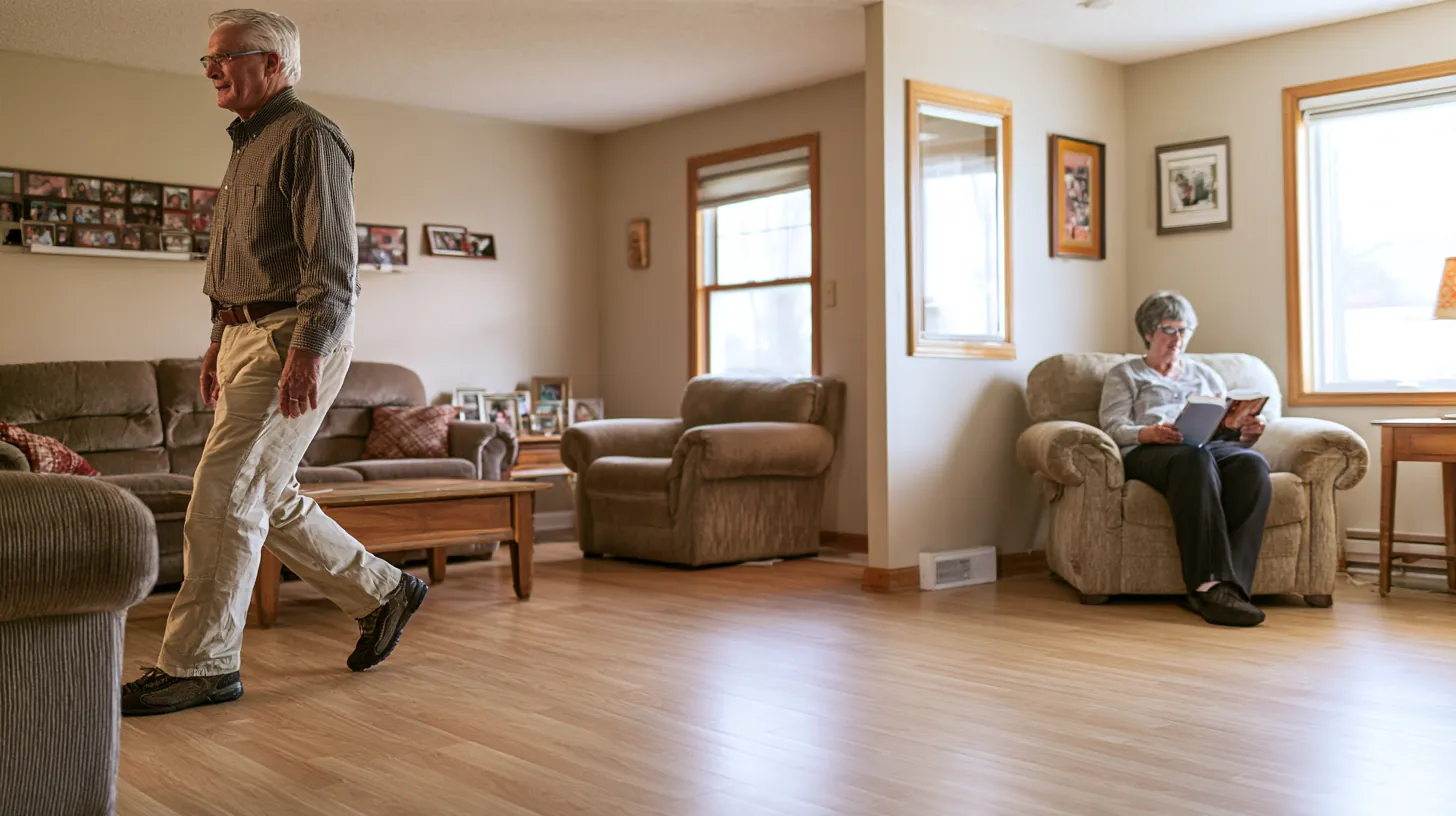
What flooring and fall prevention includes
- Slip-resistant flooring installation
- Luxury vinyl plank flooring
- Non-slip bathroom tile
- Carpet removal and replacement
- Loose carpet repair
- Uneven floor correction
- Threshold leveling
- Raised transition removal
- Trip hazard elimination
- Floorboard repairs
- Stair tread replacement
- Non-slip stair strips
- High-contrast stair nosing
- Entryway floor safety upgrades
- Walker-friendly flooring transitions
- Wheelchair-friendly flooring improvements
How we handle flooring
- Walk the floors on the daily route. Every rug edge, raised threshold, loose board and slick spot between the bed, the bath and the kitchen.
- Rank the trips. The night path to the bathroom usually comes first, then stairs, then the rooms used most.
- Level and replace where needed. Thresholds come down, transitions get leveled, carpet that catches feet comes out and non slip flooring goes in.
Fix the edge and keep the floor
Most trip hazards sit at an edge, a threshold strip or a rug, and the floor around them can stay. We take carpet out where the carpet is the hazard and level the transitions where two floors meet. New flooring gets priced only for a room where the surface itself is the problem.
That keeps floor work in its place in the order. A leveled threshold on the way to the bathroom at night is small and goes in early. A whole new floor is a project, and it waits behind whatever the report ranks as more dangerous.
Why floors matter more with age
A younger foot clears a quarter inch without noticing. A shuffling step, or a step behind a cane or a walker, barely leaves the floor, so every change of height or surface becomes a place to catch. Wet and polished floors add slips on top of the trips.
Leveling transitions
Where two floors meet there's often a raised strip or a lip of a quarter inch or more. We level those transitions so the floors meet flush, or set a low, gradual ramp where they can't. Raised thresholds at doorways come out or get ramped.
Rugs and carpet
A runner in the hall that has been there for twenty years is still a trip hazard. Some rugs can be secured flat, and the ones that slide or curl come up. Worn or loose carpet gets replaced with a level surface that's easy to walk and roll on.
Non-slip surfaces
In the bathroom, the kitchen and at the door, where water and wet shoes meet the floor, we put down non-slip flooring. We pick surfaces that grip when wet, clean easily and let a walker or wheelchair cross without catching.
Seeing the edges
Contrast edging marks the front edge of each step, so it shows up with weaker eyes or in dim light. It's one of the smallest jobs on the list, and it goes on every set of stairs that needs it.
Floor work gets priced in writing after the assessment, once the rooms and materials are known. Often the most useful fix is taking something away, like that runner, and the report will say so.
Where the work usually starts
On the routes that get walked over and over, often by someone tired. The night path from the bed to the bathroom, the kitchen, and the way from the front door to the favorite chair. One raised edge on those routes matters more than a worn spot in the guest room, which can wait.
Walkers, canes and wheelchairs
A cane tip catches on a rug edge. A walker's front legs stop dead at a threshold strip while the person keeps moving forward. A wheelchair needs a level, firm surface to roll on, and thick carpet fights it. If any of these is in use or on its way, we plan the floors around it, down to the transitions between rooms and the turning space at each doorway.