
What lighting and home safety includes
- Motion-activated hallway lighting
- Bedroom-to-bathroom pathway lighting
- Staircase lighting upgrades
- Under-cabinet kitchen lighting
- Bathroom task lighting
- Motion-sensor nightlights
- Automatic closet lighting
- Accessible light switch installations
- Rocker-style switch conversions
- Illuminated light switches
- High-contrast switch plates
- Exterior entry lighting
- Porch and pathway lighting
- Glare-reduction improvements
- Smart lighting controls
How we handle lighting
- Look at the house after dark. The bedroom to bathroom route, the stairs, the entry and the kitchen counters, at the hour they get used.
- Mark the dark spots and the glare. Switches nobody can find, steps with no edge to see and windows that blind at noon all go on the list.
- Light the routes first. Motion lights on the night path and stair lighting go in before any whole home upgrade.
The night path to the bathroom
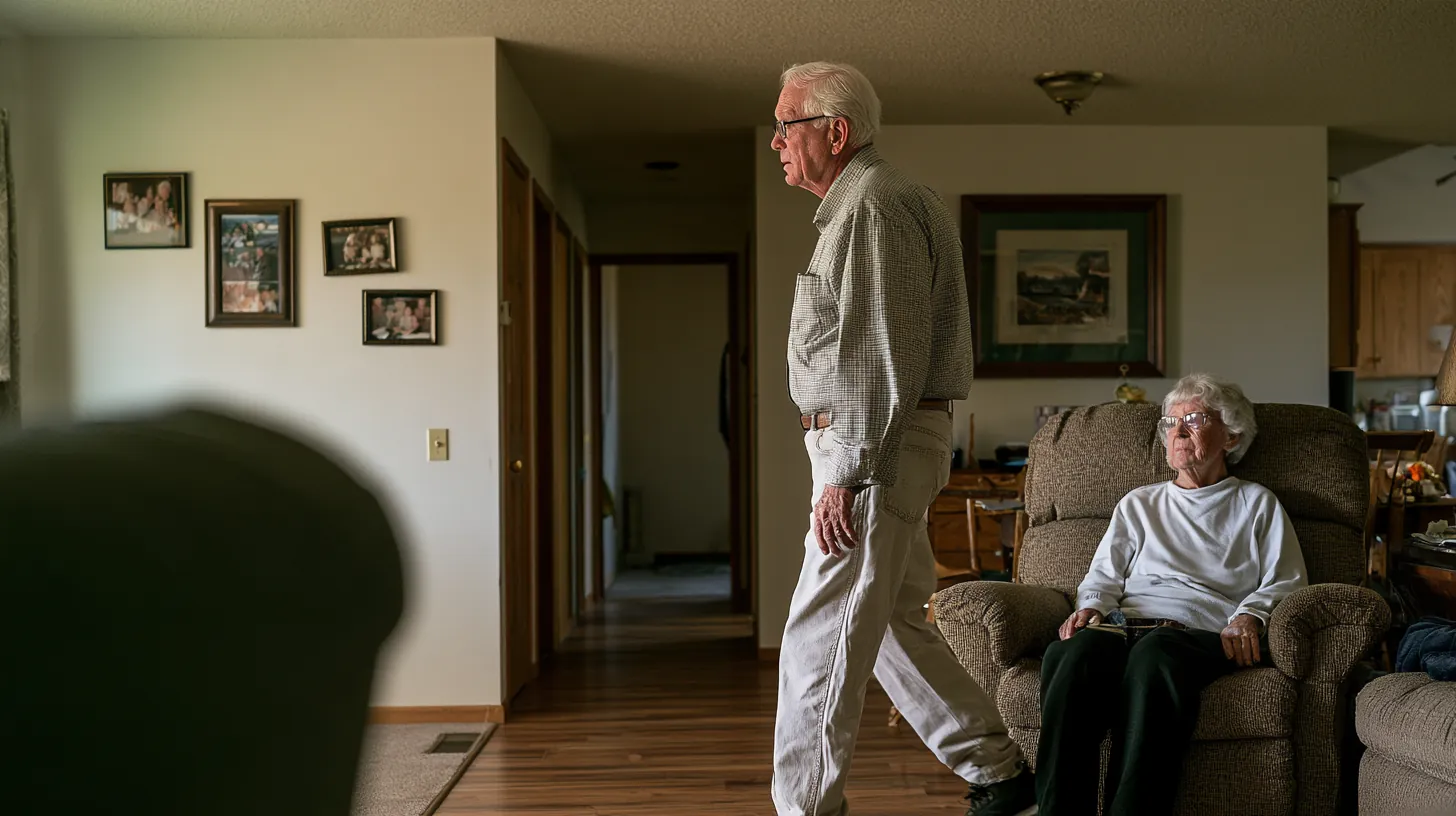
The walk from the bed to the bathroom at 3 a.m. is one of the riskiest in the house. The person is half awake, the switch is at the far end of the hall, and the floor is dark. Motion path lighting along that route comes on by itself the moment someone gets up, so nobody has to hunt for a switch.
Brighter halls, stairs and entries
Older eyes need more light to see the same detail. We replace dim fixtures in halls, on stairs and at the front door with brighter, even light, and make sure the stairs are lit from top to bottom. Switches go where people reach for them, at both ends of a hall and at the top and bottom of the stairs.
Task light and glare
Under-cabinet lights put light on the kitchen counter, where the knives and burners are. Glare off a bare bulb or a shiny floor makes things harder to see, so we choose fixtures and shades that spread the light out evenly.
Contrast
A dark switch plate on a pale wall is easy to find in a hurry. High-contrast nosing marks the edge of each step. Details this small matter more as eyesight changes, and they cost very little.
Why lighting goes in early
A grab bar you can't see at night is less use, and a leveled floor still trips someone if the hall is dark. That's why the report often puts lighting in the first round of work, beside the bathroom and the entry. It's also one of the smaller jobs in the house, so it protects the person quickly without waiting on a large project.
If someone lives alone
When someone lives alone, a dead bulb in a high fixture can stay dead for months, because climbing a ladder is exactly what they shouldn't do. So part of the job is choosing long-life fixtures and putting light where it can be reached and kept up. On the Livable Plan, our crew checks and changes bulbs on every visit, including the ones nobody can reach.
What the report covers
The assessment checks the light across the whole house, and if you can, book it for late afternoon so we see the hall the way your parent does. The report then lists the fixtures, switches and paths that need work, room by room, each with its fix. Lighting gets priced in writing alongside the bathroom and entry work, so you can decide what goes first.
| Work | Typical installed range |
|---|---|
| Whole-home lighting upgrade | $500 to $3,000 |
Typical installed ranges from national cost guides, not a quote. Your price comes in writing after we see the house.
What lighting work fixes
Lighting around DC
- Light from the curb to the bed in Anacostia, DC
- Light on the porch and the night path in Petworth, DC
- Light from the car to the kitchen in Shepherd Park, DC
- A lit path from bedroom to bath in District Heights, MD
- Hollin Hills glass and shadow in Fort Hunt, VA
- A lit path from the bed to the bath in Leisure World, MD