
What accessible kitchen remodeling includes
- Pull-out cabinet shelving
- Pull-down upper cabinet shelving
- Accessible lower cabinet conversions
- Easy-reach kitchen storage
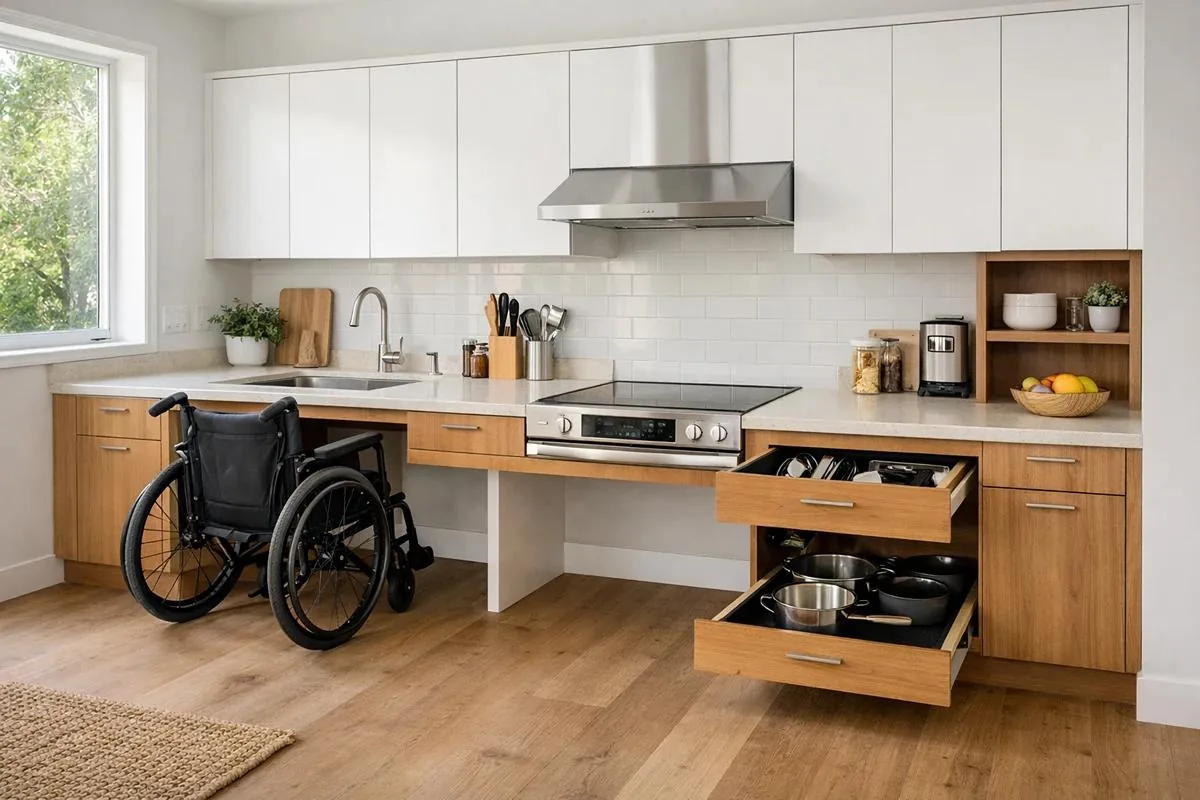
- Lowered countertop sections
- Wheelchair-accessible counter space
- Accessible kitchen sink installation
- Lever-handle faucets
- Touch-activated faucets
- Easy-grip cabinet handles
- D-shaped drawer pulls
- Under-cabinet task lighting
- Accessible appliance positioning
- Kitchen flooring safety upgrades
- Kitchen doorway widening
- Accessible pantry organization
How we handle kitchen
- Watch a meal get made. Which shelves get climbed for, which drawers stick, where the light is poor and where a seated cook needs room.
- Price the reach and the light first. Pull down shelves, pull out drawers, lever faucets and task lights cost far less than new cabinets and change the room fast.
- Change only what the cook needs. A lowered counter section or a rebuilt sink base comes in only where the report says the kitchen needs it.
Why the kitchen usually waits
For a parent who lives alone, the kitchen usually comes after the bathroom, the entry and the light on the way to the bathroom at night. Those go first in our order, and we say so up front, even when the kitchen is the room you called about.
The exception is the cook who climbs a step stool for the everyday plates. Moving them down to a shelf between shoulder and hip is a job for this week, and it needs no remodel.
Reach without a step stool
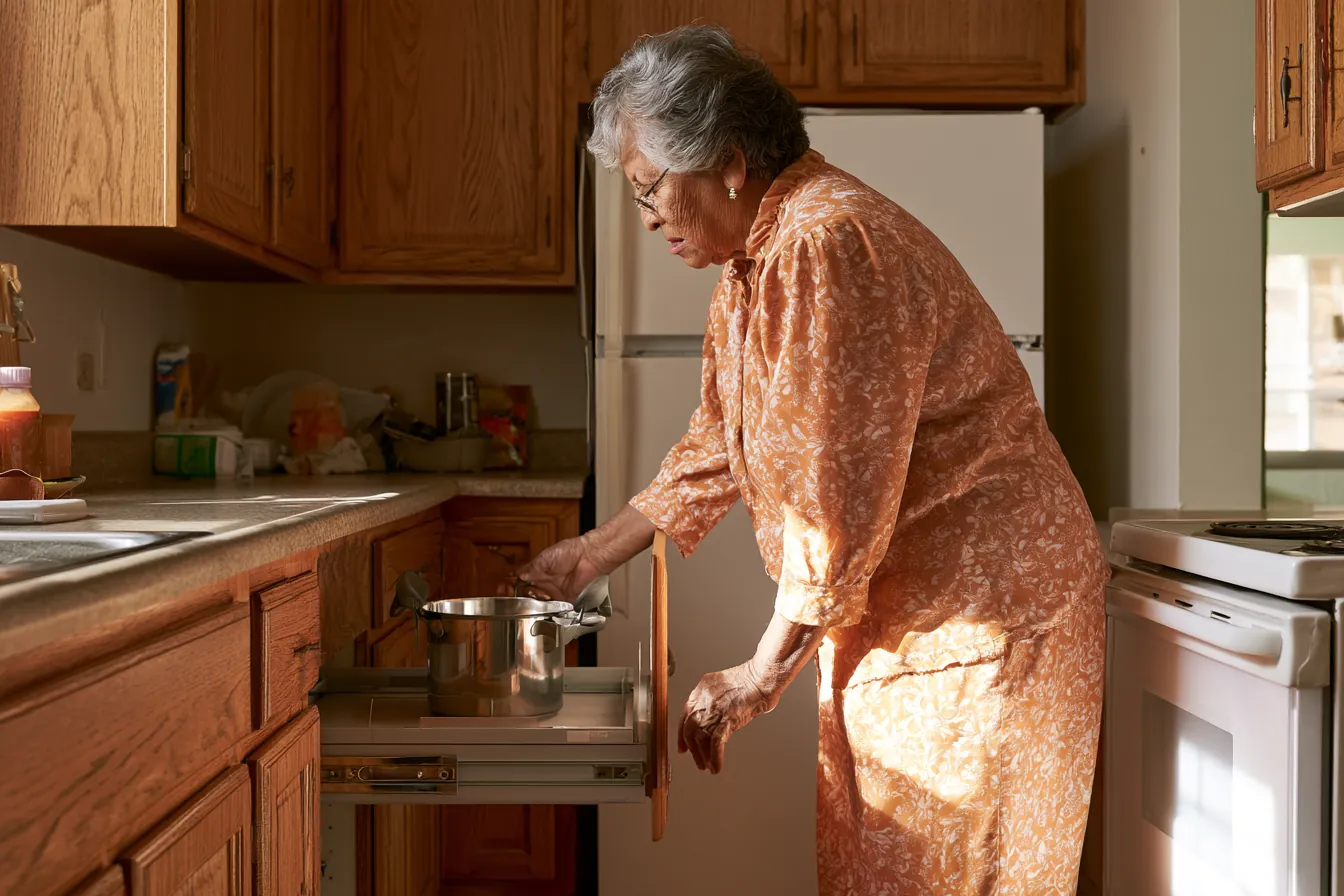
The step stool by the counter is how a lot of kitchen falls start. Pull-down shelving brings the contents of an upper cabinet down to counter height with one pull. We also move the everyday dishes, pots and food into the cabinets between shoulder and hip, and build out storage where the layout runs short.
No more deep bends
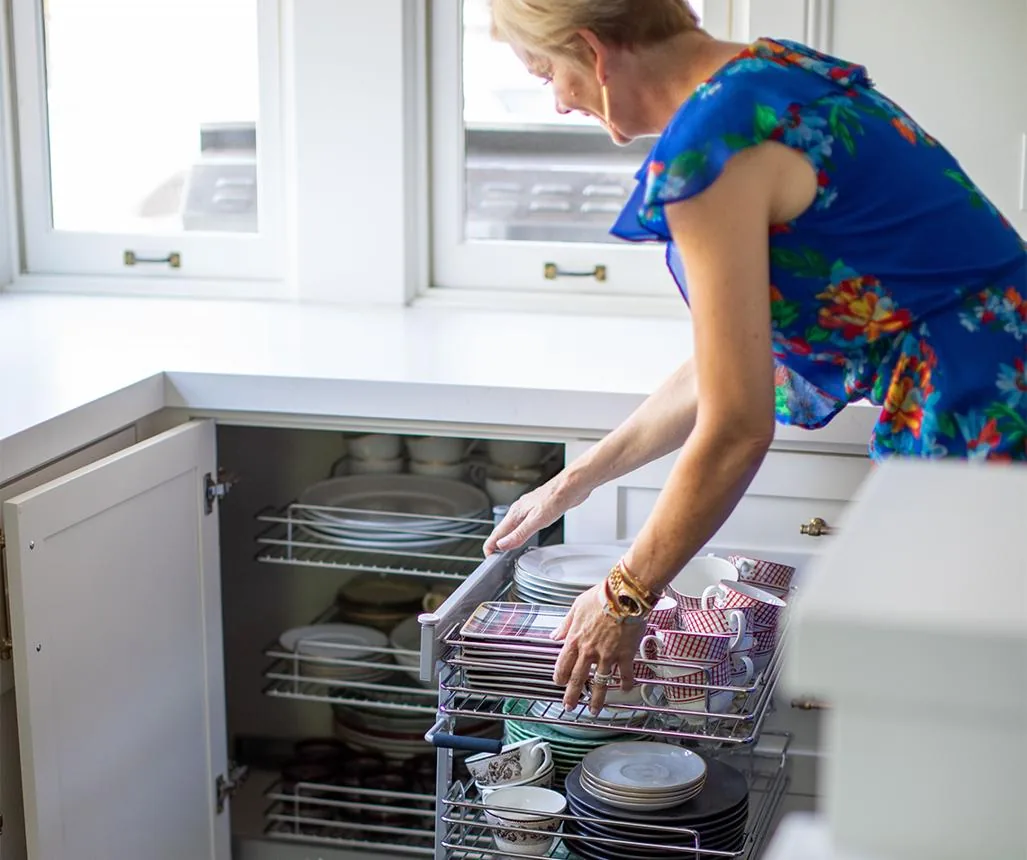
Deep base cabinets mean kneeling, or bending over while holding something heavy. Pull-out shelves bring the back of the cabinet out to the front, so nobody digs for the stockpot on their knees. Pantries and the cabinet under the sink get the same treatment.
Faucets and controls
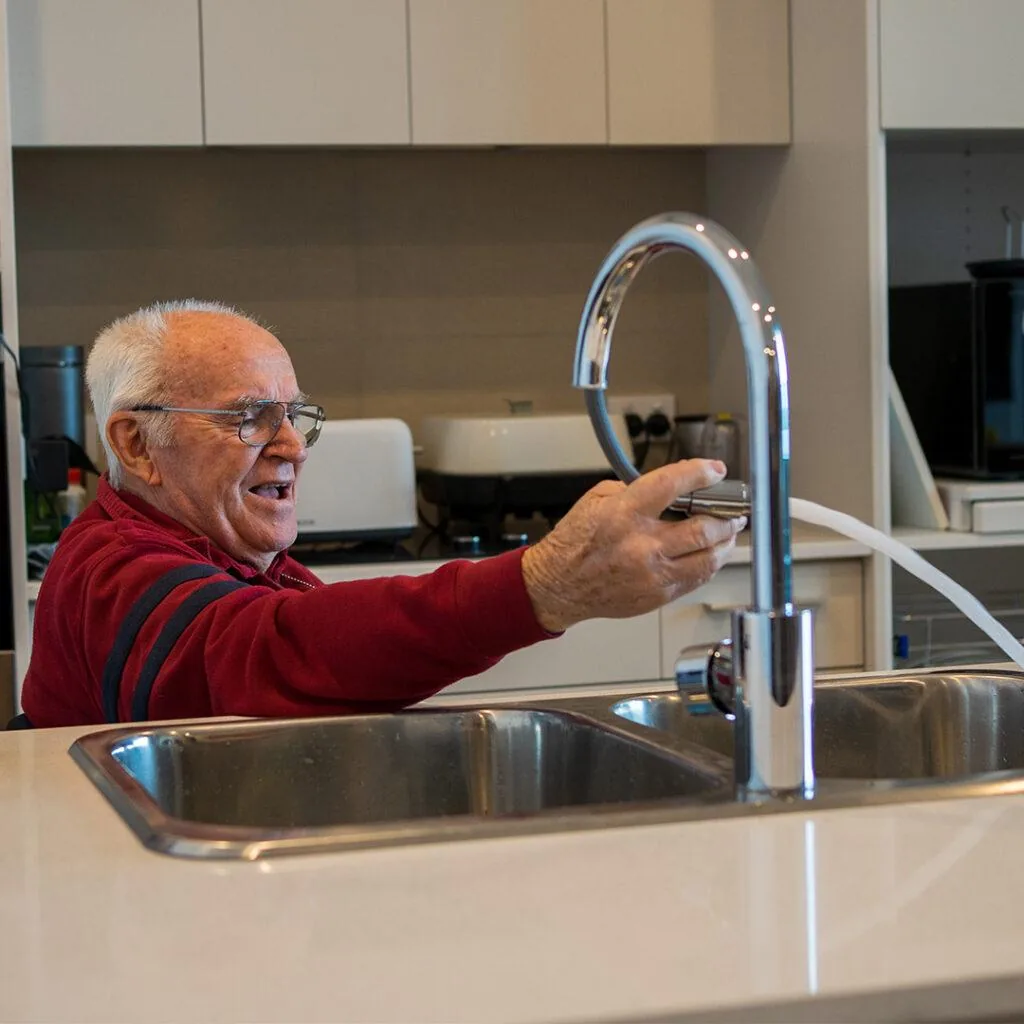
Round faucet handles and small twist knobs get hard with arthritis or a weak grip. Lever and touch faucets turn on with a push of the hand or the wrist, and cabinet knobs can become D-shaped pulls a closed hand can hook.
Light and standing
Under-cabinet lights put the light on the counter, where the knife and the cutting board are, instead of behind the cook's head. Where someone stands to cook, a non-slip, anti-fatigue surface makes the standing easier and keeps a splash from turning slick.
Working with the kitchen you have
Most of this fits inside the cabinets and layout you already have. We only recommend a new kitchen when the assessment finds the current one can't be made to work. The price comes in writing after the walk, because it depends on what's in the cabinets now and what the cook needs most.
We also check the trip from the stove to the table. A kitchen that works still needs a lit, clear path for carrying a hot plate to where the meal gets eaten.
Who the kitchen work is for
People hold on to cooking longer than almost anything else, and for someone living alone it's often what keeps them independent. For a couple where one person is declining, the changes spare the caregiver from hauling heavy pots out of a low oven. In a shared family kitchen, a reachable shelf and a lever faucet suit the grandkids as well as your mother.
What the assessment checks in the kitchen
We open the cabinets and see where the everyday things live. We check the reach to the upper shelves, the depth of the base cabinets, the faucet and stove controls, the light on the counter and the floor where the cook stands, and we note anything that already takes a step stool. The report lists each change with its fix, so the family can choose what goes first.